
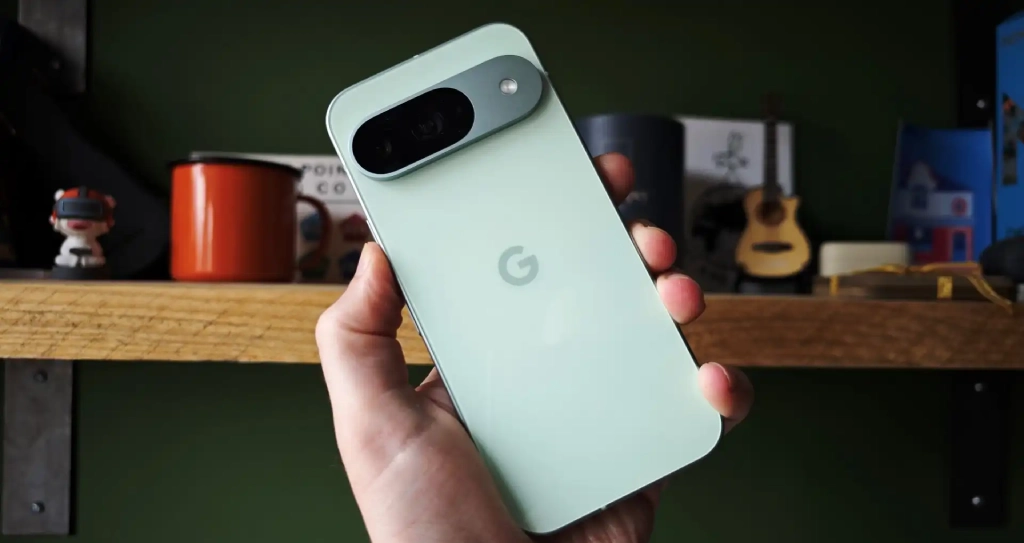
For $499, you are getting Google’s flagship processor, a genuinely impressive camera, and a battery that laughs at heavy users. That alone should stop the conversation. But there is more to the Pixel 9a story than a spec list.
I spent several weeks testing the Pixel 9a as a daily driver. From morning commutes to late-night binge sessions, from shooting photos at golden hour to playing games on a long-haul flight. The verdict? It is the smartest budget phone Google has ever made. But smart does not mean perfect.
Google Pixel 9a Overview
The Pixel 9a sits at the entry point of Google’s current Pixel 9 lineup. It is not a watered-down device, though. This year, Google made a bold choice by dropping the same Tensor G4 chip into the 9a that runs the flagship Pixel 9 Pro XL. That decision alone changes the entire conversation about budget Android phones.
What you are getting is near-flagship performance, Google’s best-in-class software experience, and seven years of guaranteed Android updates. For a phone priced at $499, that kind of long-term commitment is almost unheard of in the market.
The trade-offs are real but manageable. The 9a ships with 8GB of RAM instead of the 12 to 16GB found in premium models, and you lose the optical telephoto lens. The charging speed stays at a modest 23W. None of these are dealbreakers at this price point.
Key Specifications
| Specification | Details |
| Display | 6.3 inch P-OLED, 120Hz, 2700 nits peak, 1080×2424 |
| Chipset | Google Tensor G4 (4nm) |
| RAM / Storage | 8GB RAM, 128GB or 256GB UFS 3.1 |
| Rear Cameras | 48MP f/1.7 main + 13MP f/2.2 ultrawide |
| Front Camera | 13MP f/2.2 |
| Battery | 5100mAh, 23W wired, 7.5W wireless |
| OS | Android 15, 7 years of updates guaranteed |
| Build / IP | Aluminum frame, plastic back, IP68 |
| Price (USD) | Starting at $499 |
Design And Display
Build Quality And OLED Screen
Hold the Pixel 9a and you immediately notice two things. First, it is surprisingly comfortable. At 154.7 x 73.3 x 8.9mm and 186 grams, it sits in that shrinking bracket of phones you can actually use with one hand. Second, the camera is flush with the back panel.
Google dropped the signature camera visor bar that defined recent Pixel designs. In its place is a simple dual-lens oval bump that sits almost completely flat. Some Pixel fans will miss the distinctive look. For everyone else, this is a cleaner, more pocket-friendly design that catches fewer snagged pockets.
The build uses an aluminum frame with a plastic back. It does not feel cheap, but it is not in the same league as Victus 2 glass-backed devices. IP68 dust and water resistance is present, which is more than most competitors offer at this price.
The 6.3-inch P-OLED panel is one of the best screens at this price. At 120Hz with a peak brightness of 2700 nits, it holds up well outdoors on bright days. Colors are accurate without being oversaturated, and the always-on display mode works efficiently without draining the battery.
The resolution sits at 1080 x 2424 pixels at 422ppi. Text looks crisp. Streaming video looks excellent. If you are coming from a phone with a lower-quality LCD panel, the difference will genuinely surprise you.
Performance And Battery
Real-World Speed And Battery Life
The Tensor G4 chip is not the fastest processor in any benchmark chart. Qualcomm’s Snapdragon 8 Elite and MediaTek’s Dimensity 9400 both outperform it on paper. In real-world daily use, though, the gap is almost invisible.
Apps open instantly. Multitasking holds up well even with several tabs and apps running simultaneously. The camera processes shots quickly, which matters when you are trying to capture a moving subject. Gaming runs smoothly at medium to high settings on demanding titles like Wuthering Waves and Zenless Zone Zero, with some frame dips expected during extended sessions due to heat management.
Where the 9a truly separates itself is battery life. The 5100mAh cell is the largest ever fitted into a Pixel. In real testing, streaming four seasons of a TV series back to back brought the phone down to just over 20 percent battery after roughly 18 hours. That is remarkable endurance for a screen-heavy activity.
The only frustration is the 23W wired charging speed. Getting from empty to full takes close to two hours. Wireless charging at 7.5W is available, but it is not a quick top-up solution. Google does include a new battery health feature that limits voltage over time to preserve long-term capacity. Your battery will age more gracefully than most phones, even if charging itself feels slow.
Camera Performance
Photo Quality And Sample Shots
Two cameras, one main and one ultrawide. No telephoto. Google is betting almost everything on computational photography, and that bet mostly pays off.
The 48MP main sensor with an f/1.7 aperture is new this year. It is brighter and wider than the 8a’s sensor, and the improvement in low-light performance is visible. Shots in dim environments show better detail, more accurate exposure, and far less noise than you would expect from a phone in this price bracket. Google’s automatic Night Mode activates cleanly without user input, and the results are genuinely impressive.
Color science is where Google consistently earns respect. Skin tones are rendered accurately. Whites do not blow out in bright scenes. Shadows retain detail. The HDR processing is toned down compared to some competitors, which means photos look natural rather than artificially punchy.
The built-in macro capability surprised me. Bring the phone close to a small object and it locks focus automatically. At 2x digital zoom, the results stay usable for social sharing and casual use. Go past 2x and clarity drops noticeably, which is the expected limitation of a camera without an optical telephoto lens.
The 13MP ultrawide is recycled from last year’s 8a. In good light it performs well. In low light it struggles with soft edges and less detail compared to the main lens. Google would do well to upgrade it in the next cycle.
Selfies from the 13MP front camera are consistent and accurate in well-lit conditions. Portrait mode handles edge detection reasonably well, though complex backgrounds can still trip it up occasionally.
Google Pixel 9a vs Google Pixel 9 Pro XL
The Pixel 9 Pro XL costs more than double the 9a. Here is what you actually get for spending that extra money.
| Feature | Pixel 9a | Pixel 9 Pro XL |
| Price | $499 | $1,099 |
| Display | 6.3″ OLED 120Hz | 6.8″ LTPO OLED 1-120Hz |
| Chip | Tensor G4 | Tensor G4 |
| RAM | 8GB | 16GB |
| Main Camera | 48MP f/1.7 | 50MP f/1.68 |
| Telephoto | None (digital only) | 5x optical zoom |
| Battery | 5100mAh | 5060mAh |
| Charging | 23W wired | 37W wired |
| Glass | Gorilla Glass 3 | Victus 2 |
| Updates | 7 years | 7 years |
The most important difference for most users is the 5x optical telephoto on the Pro XL. If you shoot a lot of sports, wildlife, or events where zoom matters, the Pro XL justifies its price. For everything else, the gap is much harder to justify.
The 9a matches the Pro XL in chip performance, software experience, and update longevity. The 9a actually edges ahead on battery capacity. For the average buyer, spending $600 more for a telephoto and faster charging does not make obvious sense.
Comparison With Realme GT 7
The realme GT 7 is a strong alternative at a similar price globally. It comes with a larger 6000mAh battery and faster 80W charging, which puts the 9a’s 23W speed in an uncomfortable position. The Dimensity 9400e chip inside the GT 7 also outperforms the Tensor G4 in raw benchmark scores.
| Feature | Pixel 9a | Realme GT 7 |
| Chipset | Tensor G4 | Dimensity 9400e |
| RAM | 8GB | Up to 12GB |
| Display | 6.3″ 120Hz OLED | 6.78″ 120Hz AMOLED |
| Battery | 5100mAh / 23W | 6000mAh / 80W |
| Main Camera | 48MP + Google AI | 50MP |
| Software Updates | 7 years | 3 years |
| Price (Global) | ~$499 | ~$438 |
| AI Features | Gemini, Circle to Search | Basic AI |
Where the Pixel 9a fights back is software. Seven years of guaranteed Android updates compared to realme’s standard three years is a massive long-term advantage. Google’s camera processing and AI features including Circle to Search, Gemini integration, and Call Assist are genuinely useful in daily use and not just marketing checkboxes.
The GT 7 is a better phone for people who want raw power and fast charging. The Pixel 9a is a better phone for people who want reliability, clean software, and a camera that consistently delivers across different conditions.
Final Verdict
The Google Pixel 9a is not a compromise device. It is a deliberate one. Google made clear choices about what to include and what to leave out, and most of those choices hold up well.
You are getting flagship-level processing, genuinely exceptional battery life, and a camera that punches well above the $499 entry price. The software experience is clean, fast, and continuously improving. Seven years of updates means this phone will still be relevant well into the next decade.
The slow 23W charging and lack of a telephoto lens are the two areas where buyers coming from more expensive devices will notice the difference. Neither is a problem for most people. If you shoot lots of zoomed-in photos or need your phone fully charged in 30 minutes, look at the Pixel 9 Pro or consider a fast-charging competitor.
For everyone else, the Pixel 9a is the most sensible phone Google makes. It is priced honestly, built to last, and easy to recommend to almost anyone upgrading from a two or three-year-old device.
Quick Verdict: Google Pixel 9a earns a strong 8.5 out of 10. Best-in-class battery, reliable camera performance, and seven years of updates make this the smartest mid-range Android purchase in 2025. Deduct a point if fast charging or optical zoom matters to you.
Frequently Asked Questions
Is the Google Pixel 9a worth buying in 2025? Yes. At $499 with a Tensor G4 chip, a 5100mAh battery, and seven years of Android updates, the Pixel 9a offers exceptional value. It outperforms most phones in its price range on software support and real-world camera results.
Does the Pixel 9a have a telephoto camera? No. The 9a uses a 48MP main lens and a 13MP ultrawide. Zoom beyond 2x is handled digitally, and quality drops noticeably past that point. If zoom photography is important to you, the Pixel 9 Pro is the better option.
How long does the Pixel 9a battery last? The 5100mAh battery is exceptional for this price range. Heavy streaming sessions of 18 or more hours still left meaningful battery remaining in testing. Day-to-day use comfortably lasts through a full day and beyond for most users.
How does the Pixel 9a compare to the Pixel 9 Pro XL? The 9a costs less than half the price of the Pro XL. You get the same chip and the same software experience. The Pro XL adds a 5x optical telephoto, faster charging, more RAM, and Victus 2 glass. For most users, the 9a represents far better value.Is the Pixel 9a better than the realme GT 7? It depends on your priorities. The realme GT 7 offers faster charging and more raw processing power. The Pixel 9a wins on software longevity, camera consistency, and the overall Google ecosystem experience.

Leave feedback about this