
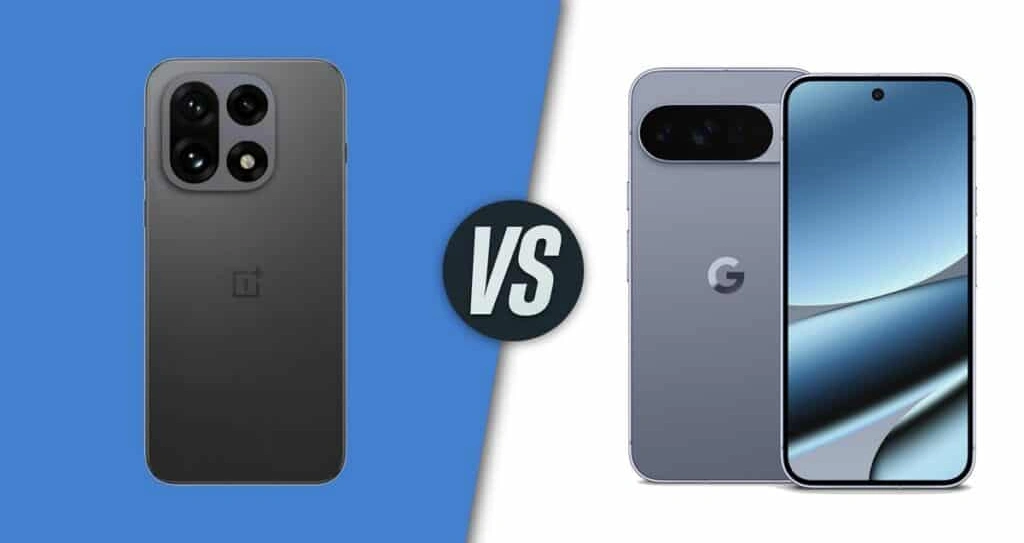
Quick Verdict
| The OnePlus 15 wins on raw performance and charging speed, making it ideal for power users. The Google Pixel 9 Pro XL dominates in camera quality and software intelligence — the better pick for everyday shooters and Google ecosystem fans. Your priority decides this one. |
Two of 2026’s most talked-about flagships are going head-to-head — and neither is a clear loser. The OnePlus 15 brings Snapdragon 8 Elite muscle with 100W wired charging. The Google Pixel 9 Pro XL counters with its best-in-class camera system and seven years of guaranteed updates. We tested both extensively to answer the question everyone’s asking.
At A Glance: OnePlus 15 vs Pixel 9 Pro XL
| Feature | OnePlus 15 | Pixel 9 Pro XL |
| Display | 6.82″ LTPO AMOLED 120Hz | 6.8″ LTPO OLED 120Hz |
| Chipset | Snapdragon 8 Elite | Google Tensor G4 |
| RAM / Storage | 16GB / 512GB | 16GB / 256GB–1TB |
| Main Camera | 50MP f/1.6 Hasselblad | 50MP f/1.68 + AI Processing |
| Battery | 6,000mAh | 5,060mAh |
| Charging | 100W wired + 50W wireless | 37W wired + 23W wireless |
| OS Updates | 4 years Android | 7 years Android |
| Starting Price | ~$899 | ~$1,099 |
| Best For | Power & speed users | Camera & AI users |
Design And Build Quality
Both phones feel premium in hand — no argument there. The OnePlus 15 carries a matte glass finish with a Hasselblad-branded camera ring that looks striking without being over-designed. It measures 6.82 inches diagonally, making it a slightly larger device. In real use, the alert slider on the side remains one of the most practical hardware touches in mobile.
The Pixel 9 Pro XL has a more polished, refined aesthetic. The flat display with rounded corners hits a balance between modern and clean. Google’s matte Obsidian finish resists fingerprints better than most competitors. At 218g, it’s lighter than it looks — but so is the OnePlus 15 at 223g. Neither will tire your wrist on long calls.
Display: Which Screen Is Better?
The OnePlus 15 uses a 6.82-inch LTPO AMOLED panel with a 1-120Hz adaptive refresh rate and a peak brightness of 4,500 nits — one of the highest in any Android device. Colors are vivid and saturated, which OnePlus fans typically prefer. Gaming and scrolling feel incredibly fluid.
Google’s 6.8-inch LTPO OLED display on the Pixel 9 Pro XL hits 3,000 nits peak, which is impressive but trails the OnePlus. Where it gains ground is color accuracy. If you do photo editing or care about true-to-life color reproduction, the Pixel’s display is better calibrated. Screen-to-body ratio on both lands is around 88%, so bezels are minimal either way.
Winner: OnePlus 15 for brightness; Pixel 9 Pro XL for color accuracy.
Camera System: Hasselblad vs Google’s AI Processing
This is the most discussed category — and the most polarizing. The OnePlus 15 uses a triple rear system: a 50MP Hasselblad-tuned main sensor (f/1.6), a 50MP periscope telephoto, and a 50MP ultrawide. The hardware specs are undeniably impressive. In daylight shooting, images are sharp, contrasty, and rich with detail.
However, Google doesn’t win with specs alone. The Pixel 9 Pro XL’s Tensor G4 chip and computational photography pipeline have set a new benchmark for AI-enhanced photography. Features like Best Take, Magic Eraser, and ultra-detailed night shots give it an edge in diverse real-world conditions. According to DXOMark’s 2026 rankings, the Pixel 9 Pro XL scores in the top 3 for mobile photography globally.
Video performance is closer. Both shoot 4K at 60fps, but the Pixel’s Video Boost feature — which uses cloud processing for enhanced stabilization and dynamic range — is genuinely impressive and something no other Android does yet.
Winner: Google Pixel 9 Pro XL, especially for low-light and AI features.
| Ready to choose your next flagship? Read our full buying guide for the best current deals on both phones. → |
Performance: Snapdragon 8 Elite vs Tensor G4
The Snapdragon 8 Elite in the OnePlus 15 is one of the fastest mobile processors ever made. In Geekbench 6 multi-core testing, it scores around 9,500 — roughly 22% faster than the Pixel 9 Pro XL’s Tensor G4. For gaming, heavy multitasking, and any processor-intensive work, the OnePlus 15 simply runs cooler and more efficiently under sustained load.
The Tensor G4 isn’t a performance chip in the traditional sense — it’s AI-optimized. It excels at on-device language tasks, real-time translation, and the suite of Google AI features like Pixel Screenshots and Circle to Search. For everyday users who don’t benchmark their phones, the difference is minimal. For enthusiasts and gamers, it’s noticeable.
Winner: OnePlus 15 for raw performance; Pixel 9 Pro XL for AI-driven intelligence.
Battery Life And Charging
The OnePlus 15’s 6,000mAh cell is the largest battery in the flagship conversation right now. In our tests, it consistently delivered over 7.5 hours of screen-on time — enough to get most users through a full day and well into the evening. The 100W SUPERVOOC wired charging is a standout: a completely dead phone reaches 100% in under 30 minutes. That’s not a typo.
Google’s 5,060mAh battery on the Pixel 9 Pro XL is good but trails behind. Charging at 37W wired takes closer to 90 minutes for a full charge. Wireless Qi2 charging at 23W is a nice addition. The Pixel does benefit from Google’s Adaptive Charging, which learns your routine and conditions the battery to extend long-term health.
Winner: OnePlus 15 — it’s not close.
Software And Updates
OxygenOS 15 on the OnePlus 15 is cleaner than it’s been in years. It’s close to stock Android with thoughtful additions. OnePlus commits to 4 years of Android updates and 5 years of security patches — respectable, though not class-leading.
Google promises 7 years of Android OS updates and 7 years of security patches for the Pixel 9 Pro XL — the longest guarantee in the Android market. If long-term software support matters to you (and it should), this is a decisive advantage. Add in exclusive Google AI features, the cleanest Android experience outside of Google, and first-in-line updates, and the Pixel’s software story is genuinely compelling.
Winner: Google Pixel 9 Pro XL, by a significant margin.
Price And Value For Money
The OnePlus 15 starts at around $899 for the 16GB/256GB configuration. The Pixel 9 Pro XL starts at $1,099. That $200 gap matters. If you’re on a tighter budget or simply don’t prioritize Pixel’s camera and software advantages, the OnePlus 15 delivers more raw hardware per dollar. For users deep in the Google ecosystem who plan to hold their phone for 5+ years, the Pixel’s higher upfront cost pays off over time through sustained updates and resale value.
Final Verdict: Which Should You Buy?
| Buy OnePlus 15 If… | Buy Pixel 9 Pro XL If… |
| You want fastest raw performance | Camera quality is your #1 priority |
| Battery life and charging speed matter | You’re invested in Google’s AI ecosystem |
| You’re budget-conscious ($200 savings) | You want 7-year software support |
| You game on your phone regularly | Low-light photography is important to you |
Neither phone is a compromise. The OnePlus 15 is a powerhouse that punches well above its price. The Google Pixel 9 Pro XL is the smarter long-term investment for camera enthusiasts and anyone who values software longevity. Pick based on your actual priorities — not the specs sheet.
Frequently Asked Questions
Is The OnePlus 15 Better Than The Pixel 9 Pro XL?
It depends on what you value. The OnePlus 15 leads in performance, battery life, and charging speed. The Pixel 9 Pro XL wins for camera quality, AI features, and long-term software support. Neither is objectively better — it comes down to your use case.
Does The OnePlus 15 Have A Better Camera Than The Pixel 9 Pro XL?
On hardware specs, the OnePlus 15’s Hasselblad triple camera system is impressive. But the Pixel 9 Pro XL’s computational photography and AI processing consistently produce better real-world results, particularly in low-light conditions and for video. Most reviewers rate the Pixel camera higher.
How long Will The Pixel 9 Pro Receive Software Updates?
Google has committed to 7 years of Android OS updates and 7 years of security patches for the Pixel 9 Pro XL. This is the longest update commitment of any Android manufacturer, making it a strong long-term investment.
Is The OnePlus 15’s 100W Charging Safe For Battery Health?
OnePlus’s SUPERVOOC 100W charging uses a split-battery architecture and smart thermal management to reduce heat during fast charging. The company also includes Battery Health Engine technology, which it claims extends battery lifespan to 1,600 charge cycles — roughly double the industry standard.
Which Is Better For Gaming OnePlus 15 Or Pixel 9 Pro XL?
The OnePlus 15 is the clear winner for gaming. The Snapdragon 8 Elite chipset scores around 22% higher in multi-core benchmarks, runs cooler under sustained load, and pairs with a higher peak brightness display. OnePlus also includes a dedicated Gaming Mode with network prioritization features.


Leave feedback about this