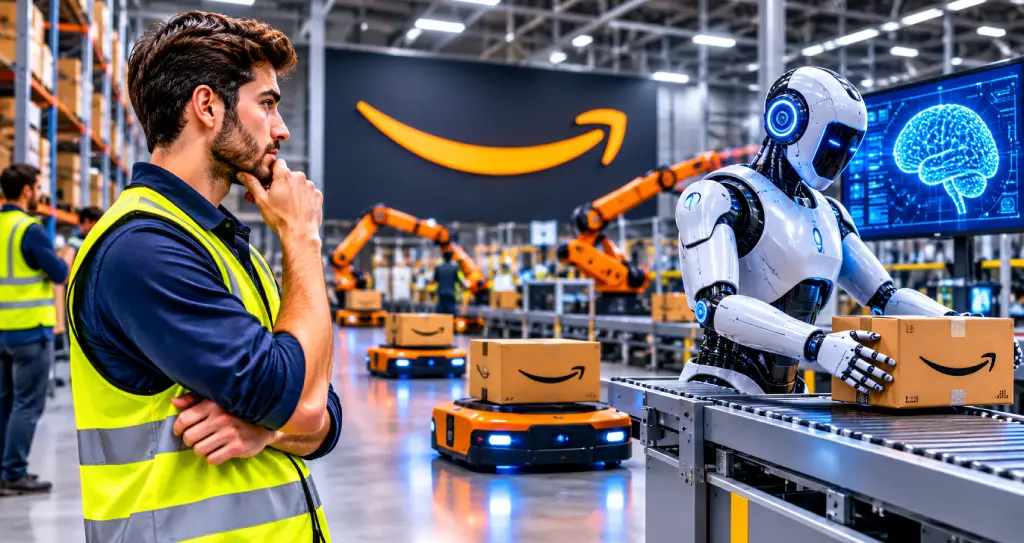
Artificial intelligence and robotics are changing the way companies operate. Amazon is one of the biggest examples of this transformation. Amazon AI and robots move products, manage inventory, and improve delivery operations in the company’s warehouses.
However this technology raises an important question: Will robots replace human workers or will they create new job opportunities?
The answer is more complicated than simply choosing one side Automation can reduce repetitive tasks but it can also change the skills companies need from their employees.
How Amazon Uses AI and Robots
Amazon has invested heavily in warehouse automation Its robots help transport inventory move packages and support employees with physically demanding tasks.
In June 2025 Amazon announced that it had deployed its one-millionth robot across its operations network It also introduced DeepFleet an AI model designed to coordinate robot movements and improve efficiency.
Moreover Amazon continues to develop systems that help employees complete warehouse tasks more safely and efficiently.
Will AI Replace Human Warehouse Workers?
Automation can take over certain repetitive activities For example robots can move heavy items transport inventory and help sort packages.
As a result some traditional warehouse tasks may require fewer manual steps.However this does not mean that every human job will disappear.
People are still needed to inspect products solve unexpected problems manage operations and maintain equipment.In addition robots require monitoring and technical support.
Therefore the future of warehouse employment may involve more cooperation between people and machines rather than complete replacement.
New Job Opportunities Created By Automation
One important effect of robotics is the demand for new technical skills.
As companies introduce more automated systems they also need employees who can maintain monitor and repair that equipment.
Some emerging roles include:
- Robotics technicians: Maintain and repair warehouse robots.
- Automation specialists: Monitor automated systems and improve their performance.
- Maintenance engineers: Identify technical problems and keep equipment working.
- Operations supervisors: Coordinate employees, machines and daily warehouse activities.
- Technical support staff: Help solve software and equipment issues.
Amazon has also highlighted training programmes that help employees develop technical skills and explore new career opportunities.
Why Workers Need To Learn New Skills
The growth of AI makes continuous learning increasingly important Employees who understand technology may have more opportunities as workplaces become automated.
For example basic computer knowledge problem-solving equipment maintenance and technical training can help workers prepare for changing job requirements.
Furthermore workers do not necessarily need an advanced degree in artificial intelligence to benefit from these changes.Practical training and experience with automated equipment can also be valuable.
Companies also have a responsibility to provide suitable training and support so employees can adapt to new working environments.
The Challenges Of AI And Workplace Automation
Although automation offers several benefits, it also creates challenges.
Some workers may worry about job security when machines take over tasks they previously performed.Others may face pressure to work at a faster pace as automated systems increase productivity.
Research by the University of Oxford’s Fairwork project has also highlighted concerns about working conditions performance pressure and employee control in automated warehouses.
Therefore businesses should consider employee well-being alongside productivity.Proper training, fair working conditions and clear communication are important when introducing new technology.
What Does The Future Look Like?
AI and robotics will likely continue changing warehouse operations, manufacturing and other industries.
Amazon’s experience shows that automation can create demand for technical roles while changing traditional jobs However the overall impact will depend on how quickly technology develops and how companies manage their workforce.
Workers who develop adaptable skills and learn to work with new tools may be better prepared for these changes.
Final Thoughts
Amazon’s investment in AI and robotics provides a useful example of how technology is transforming modern workplaces.
Robots can handle repetitive and physically demanding activities while people remain important for technical maintenance decision-making and problem-solving.
The future of work will not depend on technology alone.It will also depend on how businesses train employees protect workers and create opportunities in an increasingly automated world.