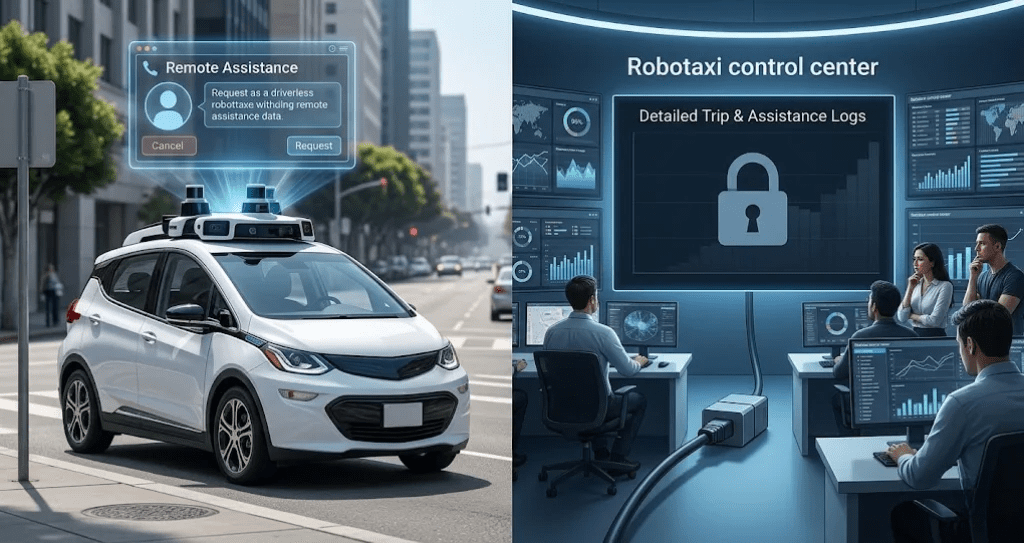
Self-driving cars are becoming more common but how much human help do they actually need? That question remains difficult to answer because major autonomous vehicle companies have refused to disclose how frequently their remote assistance teams intervene.
In March 2026 Senator Ed Markey investigated seven companies: Aurora, May Mobility, Motional, Nuro, Tesla, Waymo and Zoox. His investigation found that none provided a clear figure showing how often remote workers assist their autonomous vehicles.
Why Robotaxi Companies Are Facing Questions
Remote assistance operators help autonomous vehicles handle unusual or difficult situations. They may provide guidance when a vehicle gets stuck or encounters a situation its automated system cannot resolve.
However remote assistance does not always mean a human remotely drives the vehicle.
Companies gave different explanations about their operations.Waymo said improvements to its self-driving technology had reduced assistance requests but it did not provide supporting figures.
Waymo also acknowledged using overseas remote assistance workers including employees based in the Philippines.
Tesla disclosed that its remote workers can temporarily take direct control of certain pilot vehicles as a last resort. According to the company this is limited to vehicles travelling at 2 mph or less with remote operation capped at 10 mph.
These differences have raised questions about safety staffing and how autonomous these vehicles really are.
Senator Markey Wants Greater Transparency
Markey’s investigation examined more than intervention frequency. It also looked at operator qualifications staffing locations response times and security practices.
The companies provided some information but important details remained undisclosed. Markey called for greater federal oversight and urged the National Highway Traffic Safety Administration (NHTSA) to investigate remote assistance practices.
The findings highlight a wider problem: consumers and regulators still have limited information about the human support behind commercial self-driving services.
California Introduces New Robotaxi Rules
A major development followed on September 30, 2026, when California Governor Gavin Newsom signed Senate Bill 1246 into law.
The legislation introduces new requirements for autonomous vehicle manufacturers including:
- Remote drivers must be based in the United States and hold a valid California driver’s licence.
- Companies must dispatch local incident technicians when vehicles cause certain accidents or obstructions.
- Manufacturers must improve coordination with emergency responders.
- Companies must maintain records of incidents, emergency responses and technician response times.
- Quarterly reporting will provide regulators with more information about autonomous vehicle operations.
Most of these new requirements become operative on July 1, 2028.
The law does not immediately make every aspect of remote assistance publicly transparent but it creates stronger reporting and accountability requirements in California.
What This Means For The Future Of Robotaxis
Remote human support remains an important part of today’s autonomous vehicle operations. However without clear intervention figures it is difficult to compare how independently different robotaxi systems operate.
California’s new legislation is a significant step towards stronger oversight. As autonomous vehicles expand regulators may demand more information about human intervention emergency response and operational safety.
For now the biggest question remains unanswered: how often do self-driving vehicles really need human help?